
ヴィア・グラジオーラ(Via Gladiola)
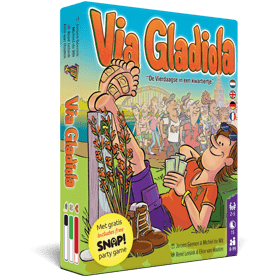 『ヴィア・グラジオーラ』は、伝説的な「ナイメーヘン国際フォーデーマーチ」にインスパイアされた、テンポの良いゴーアウト系(大富豪系)カードゲームです。各日1ラウンドずつ、計4ラウンドを通して、プレイヤーはできるだけ「水ぶくれ」を作らずに完歩を目指します。
各日は0kmから始まり、50kmで終了します。手番では、山札より大きいカードを出して「歩く」か、「その場に留まって」ペナルティカードを引くかのどちらかを行います。最大5kmまでは安全に進めます。6~10km先へ進む場合は1枚、11~15km先へ進む場合は2枚のペナルティカードを引かなければなりません。それ以上の距離を進むことはできません。無理をしすぎです。
4日目に限り、「グラジオラ」カードは、ペナルティカードを引かずにその場に留まることで、あなたを少し楽にしてくれます。
効率よく手札を終え、水ぶくれアイコンを積み重ねないようにしましょう。4日後、水ぶくれが最も少ないプレイヤーが勝者です。
プレイヤーの数: 2 - 5
ゲームの長さ: 14 mn
複雑さ: 1 / 5
ヴィア・グラジオーラ(Via Gladiola) および1414の他のゲームをオンラインでプレイします。
ダウンロード不要で、ブラウザから直接プレイできます。
あなたの友達や世界中のたくさんのプレイヤーとプレイできます。
無料です!


ヴィア・グラジオーラ(Via Gladiola) および1414の他のゲームをオンラインでプレイします。
ダウンロード不要で、ブラウザから直接プレイできます。
あなたの友達や世界中のたくさんのプレイヤーとプレイできます。
無料です!
ルールの概要
Via Gladiola OVERVIEW In Via Gladiola, players take part in a four-day walking challenge inspired by the Nijmegen Marches. Each turn, you decide whether to keep walking, take a short rest, or celebrate your progress with a Gladiola. Play your cards in sequence to advance — but pace yourself! Walking too far too fast causes injuries and discomfort. After four days, the player with the least total discomfort wins the march.
COMPONENTS 67 cards:
  • 49 Kilometer cards (values 1–49, each unique, showing 0–5 discomfort symbols (X) and 3 pace intervals)
  • 4 Start cards (value 0)
  • 6 End cards (value 50, 0–2 discomfort symbols)
  • 8 Gladiola cards (1–5 discomfort symbols)
SETUP
  1. Place one Start card (0) face up in the center of the table. This begins the walk pile.
  2. Shuffle all remaining cards — including the End cards (50) and Gladiolas — into a single draw pile.
  3. Deal 7 cards to each player.
  4. The player who most recently went for a walk begins.
PLAYING THE GAME Players take turns clockwise. On your turn, choose one of the following actions:
Walk, Stand Still or Play a Gladiola.
ACTION 1 - WALK Play one card from your hand with a higher value than the top card of the walk pile and place it on top to advance. How far you walk determines how tired you become. The top card on the walk pile shows 4 colored pace indicators that show the lowest number for 4 intervals. The intervals are the same for all cards:
 Interval Meaning
  +1 to +5 Safe pace – draw no cards
  +6 to +10 Pushed too far – draw 1 card
  +11 to +15 Overexerted – draw 2 cards
  > +15 Too far – not allowed
End cards (with value 50) may also be played (if the step size allows). Playing an End card immediately ends the current day.
ACTION 2 - STAND STILL Play nothing and draw 1 card from the draw pile. Sometimes resting is better than risking fatigue.
ACTION 3 - PLAY A GLADIOLA (Day 4 only) During day 4, you may choose this action instead of Walking or Standing Still. Play a Gladiola card and place it beside the walk pile as a symbol of your triumph. Gladiolas do not affect card order or cause any draws.
End of a Day When an End card (50) is played, the current day ends immediately. Leave the 50 in place, then add a new Start card (0) beside the pile to begin the next day.
Example of Play Three players — Alex, Bobbie, and Charlie — are walking on Day 1. The top card on the walk pile is 12.
 • Alex plays 16, a safe pace (+4).
     Alex draws nothing.
  • Bobbie plays 23, a pushed pace (+7).
     They draw 1 card.
  • Charlie can’t play higher than 23, so they Stand
     Still and draw 1 card.
  • Alex now plays 34, overexerting (+11) and drawing 2 cards.
  • Later, Bobbie plays a 50, ending Day 1. They place a new Start card (0) to begin Day 2.
Empty Draw Pile In the unlikely event that the draw pile runs out of cards, recycle the oldest completed day first. Take all cards from the earliest completed day that has not yet been recycled (starting with Day 1), excluding that day’s Start card (0). Shuffle those cards to form a new draw pile. If the pile runs out again later, repeat the process with the next oldest completed day (Day 2, then Day 3). When needed, continue in this way until the end of Day 4.
End of the Game When the fourth day ends it is time for final scoring to determine the winner: • Each player adds up the number of discomfort symbols on the cards remaining in their hand. • The player with the lowest total discomfort wins. • If tied, the player with fewer cards wins. • If still tied, players share the victory.